
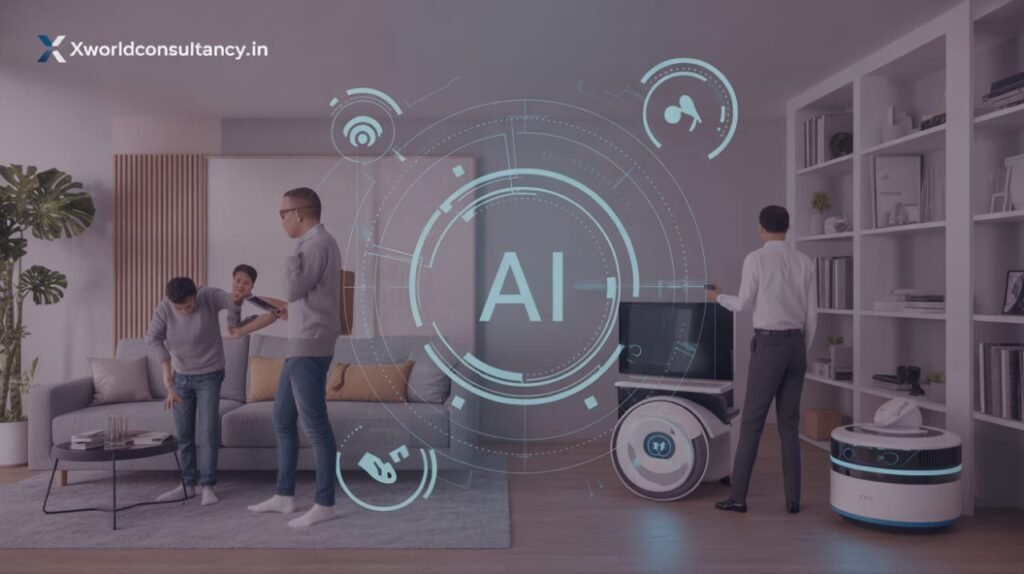
Artificial Intelligence (AI) is no longer just a futuristic concept. It has become an integral part of our everyday lives. From the moment we wake up to the time we go to bed, AI in Daily Life touches almost every aspect of our routines. Whether it is through smartphones, smart home devices, online platforms, or workplace technologies, AI is shaping our experiences in ways that are both subtle and significant. In this blog, we will explore how AI influences our daily lives, its practical applications, benefits, and challenges, along with a vision for the future.
Understanding AI in Daily Life
AI refers to computer systems that can perform tasks requiring human-like intelligence. These include problem-solving, learning, decision-making, speech recognition, and visual perception. Today, AI is not limited to research laboratories or advanced robotics; instead, it exists in tools and applications we use every day. From personalized recommendations on Netflix to navigation apps like Google Maps, AI works behind the scenes to make our lives more efficient and comfortable.
AI in Smartphones
One of the most common ways AI integrates into our daily routine is through smartphones. These pocket-sized devices use AI to enhance user experience in numerous ways. For example, AI powers voice assistants such as Siri, Google Assistant, and Alexa. They help users send messages, search for information, and control other smart devices using simple voice commands. Additionally, AI improves smartphone cameras by recognizing faces, optimizing lighting, and even suggesting the best angles for photography. Moreover, predictive text and autocorrect features are powered by AI, which makes communication faster and more accurate.
AI in Smart Homes
Smart homes have become increasingly popular because of AI. Devices such as smart thermostats, lighting systems, and security cameras rely on AI to function effectively. For instance, smart thermostats learn user preferences and adjust temperatures accordingly, helping save energy and reduce costs. Similarly, AI-powered security systems can detect unusual movements, recognize faces, and send real-time alerts to homeowners. Additionally, voice-activated assistants can control appliances, play music, or answer questions, creating a seamless living environment.
AI in Entertainment
Entertainment platforms rely heavily on AI to provide personalized experiences. Streaming services such as Netflix, Amazon Prime, and Spotify use AI algorithms to recommend shows, movies, or songs based on a user’s viewing and listening history. These recommendations ensure that users always find content that matches their tastes. Furthermore, AI contributes to gaming by creating intelligent opponents that adapt to players’ strategies, making gameplay more engaging. Virtual reality (VR) and augmented reality (AR) technologies also integrate AI to provide immersive entertainment experiences.
AI in Daily Life Communication
AI has revolutionized the way we communicate with each other. Social media platforms like Facebook, Instagram, and Twitter use AI to curate feeds, detect spam, and recommend connections. Additionally, AI translates languages in real time, breaking down communication barriers between people of different linguistic backgrounds. Tools like Google Translate, powered by AI, make it easier for people to understand and interact across cultures. Moreover, AI enhances video conferencing by improving sound quality, removing background noise, and enabling virtual backgrounds, which are now crucial for remote work and learning.
AI in Education
Education has been greatly enhanced by AI. Online learning platforms such as Coursera and Khan Academy use AI to provide personalized learning paths. These platforms adapt to a student’s pace and style of learning, ensuring better understanding and retention of knowledge. Additionally, AI chatbots help answer student queries instantly, making learning more interactive. Teachers also benefit from AI tools that assist in grading assignments and analyzing student performance, which saves time and allows them to focus on improving teaching strategies.
AI in Healthcare
Healthcare is one of the most critical areas where AI plays a vital role. AI systems help in diagnosing diseases by analyzing medical images and patient data. For instance, AI algorithms can detect early signs of cancer or heart disease, which allows for timely treatment. Virtual health assistants remind patients to take medications and monitor their health conditions. Furthermore, AI chatbots provide basic medical advice and schedule appointments, making healthcare more accessible and efficient. Additionally, during the COVID-19 pandemic, AI played a crucial role in tracking infections and assisting in vaccine development.
AI in Transportation
Transportation has become smarter with AI-driven technologies. Navigation apps like Google Maps and Waze use AI to provide real-time traffic updates and suggest the fastest routes. Ride-hailing apps like Uber and Ola rely on AI to match passengers with drivers efficiently. Moreover, self-driving cars, though still in development, represent the future of AI in transportation. These vehicles use AI to detect obstacles, follow traffic rules, and ensure passenger safety. AI also enhances public transport systems by optimizing routes and schedules, improving convenience for commuters.
AI in Daily LifeShopping and E-commerce
Online shopping platforms are another domain where AI in Daily Life has made a significant impact. Websites like Amazon and Flipkart use AI to recommend products based on browsing and purchasing history. AI-powered chatbots assist customers with queries, making the shopping experience more interactive. Additionally, AI helps retailers manage inventory by predicting demand trends. Personalized advertisements, driven by AI, ensure that customers see products relevant to their interests, making online shopping more efficient and engaging.
AI in Daily Life Banking and Finance
Banking and finance industries benefit immensely from AI technologies. AI systems detect fraudulent transactions by analyzing unusual spending patterns. Chatbots in banking apps assist customers in checking balances, transferring money, and resolving queries instantly. AI also powers robo-advisors that provide investment advice based on user preferences and financial goals. Furthermore, AI algorithms analyze market trends and help traders make informed decisions. These applications not only improve customer experience but also enhance security and efficiency in financial services.
AI in Workplaces
AI in Daily Life has transformed workplaces by automating repetitive tasks and boosting productivity. Virtual assistants schedule meetings, manage calendars, and send reminders, allowing professionals to focus on more important tasks. AI-powered tools analyze large datasets to provide insights for decision-making. Collaboration platforms like Microsoft Teams and Slack use AI to enhance communication and workflow management. Additionally, AI supports recruitment processes by scanning resumes and identifying suitable candidates, which saves time for HR professionals.
AI in Personal Finance Management
AI applications help individuals manage their personal finances more effectively. Budgeting apps use AI to track expenses, categorize spending, and suggest savings opportunities. These apps provide insights into financial habits and help users achieve their financial goals. AI also enables automated bill payments and reminds users of due dates, preventing missed payments and late fees. By simplifying financial management, AI empowers individuals to make better financial decisions.
AI in Food and Lifestyle
AI has even influenced how we eat and live. Food delivery apps like Zomato and Swiggy use AI to recommend dishes based on past orders. Fitness apps powered by AI track physical activity, monitor sleep patterns, and suggest personalized workout plans. AI-enabled wearables such as smartwatches provide real-time health data, including heart rate, oxygen levels, and calorie burn. By analyzing this information, AI helps individuals adopt healthier lifestyles and maintain well-being.
Challenges of AI in Daily Life
While AI offers numerous benefits, it also presents certain challenges. One major concern is data privacy, as AI systems rely on collecting and analyzing personal information. Additionally, there is the risk of job displacement due to automation, which can impact employment opportunities in some industries. Moreover, AI systems can sometimes make errors or reflect biases present in their training data. These challenges highlight the importance of developing AI responsibly and ensuring ethical practices.
The Future of AI in Daily Life
The future of AI promises even more advancements. With the rise of smart cities, AI will play a key role in managing traffic, energy, and waste systems. Healthcare will see more AI-driven innovations in personalized treatments and robotic surgeries. Education will continue to evolve with AI tutors and interactive classrooms. Furthermore, as self-driving cars become mainstream, commuting will be safer and more efficient. However, to fully realize these benefits, it is essential to address the ethical, legal, and social implications of AI.
Conclusion
AI has become an inseparable part of our daily lives, making tasks easier, faster, and more efficient. From smartphones to healthcare, from education to entertainment, AI’s influence is everywhere. While there are challenges to overcome, the benefits of AI are undeniable. By adopting responsible practices, we can harness the power of AI to create a future that enhances human potential and improves the quality of life. Ultimately, AI is not just about technology; it is about creating a smarter, more connected, and more convenient world for everyone.
Buy Now : https://xworldconsultancy.in/courses/ai-tools-mastery-21-tools-to-earn/
Subscribe Now : https://youtube.com/@xworldconsultancy
Follow Us On Instagram : https://www.instagram.com/xworldconsultancy
Follow Us On X : https://x.com/xwconsultancy

Founder of X World Consultancy | Helping India grow with AI, Digital Skills & Career Transformation. 🚀
📍 Based in Haryana | 🇮🇳 Made for Bharat
🌐 Visit: https://xworldconsultancy.in
📩 support@xworldconsultancy.com
Nice 👍
Nice
Helpful
Good information
radhagawande2@gmail.com
Very nice
Nice
Good information
Good
Very useful 👌
Truly AI has become an important part of Our life 👍
AI is becoming inseparable part of our life
Nice article
Al both kaam k chiz bangye h abhi
Al both kaam k chiz bangye h abhi😊😊
Ai is most important in future
Daily way mai bhot use full h
Daily life Mai bhot use hotha h
Ai is such a helpful thing in our daily lyf cores … really helpful…
Impressed by this 😊
AI. Devices such as smart thermostats, lighting systems, and security cameras rely on AI to function effectively. For instance, smart thermostats learn user preferences and adjust
Education has been greatly enhanced one of the most common by ai online platform
Very good
There are somany things to learn. AI helps to improve our life better then before.
💯💯💯💯
Artificial intelligence
Good information in transforming
👍
Good
Ai in daily life
The future of AI promises even more advancements. With the rise of smart cities, AI will play a key role in managing traffic, energy, and waste systems. Healthcare will see more AI-driven innovations in personalized treatments and robotic surgeries. Education will continue to evolve with AI tutors and interactive classrooms. Furthermore, as self-driving cars become mainstream, commuting will be safer and more efficient. However, to fully realize these benefits, it is essential to address the ethical, legal, and social implications of AI.
AI in Daily Life: Transforming the Way We Live
Online service provide by AI
Very nice 🙂
Super
Communication
Nice 👍
Nice information
Tranframing
Tranforming way of life
Good
Ai have become an inseparable part of our daily life making easiest faster and more efficient the benefits of air and able it is about smarter more connected and more convenient world for everyone
Good
AI refers to computer systems that can perform tasks requiring human-like intelligence. These include problem-solving, learning, decision-making, speech recognition, and visual perception. Today, AI is not limited to research laboratories or advanced robotics; instead, it exists in tools and applications we use every day. From personalized recommendations on Netflix to navigation apps like Google Maps, AI works behind the scenes to make our lives more efficient and comfortable.
This was really useful, keep posting more.
Ai is integral part of our everyday lives we use ai daliy in our life through online platform in covid19 it is very helpful for use we can say that ai best source for us
AI manushya ki jivan shaili mein mukhya Roop se kam karta hai pratyek din ke dincharya mein kiski sahbhagita hoti hai chahe vah smartphone Ho, swasth sambandhi Ho, ya Manoranjan ke roop mein
Ai is best source for us we are use ai as education purpose
AI life changing technology
👍
AI grow up day by day
AI more power ex sayr google siri etc
Good 👍
Excellent 👌
Good nice
Nice
Such a well-written blog! It clearly shows how AI has become a part of our everyday life—from smartphones and smart homes to healthcare and education. The examples make it very relatable, and the future vision is truly inspiring.”
Your perspective adds valuable depth to the conversation. Well said!
Very informative article
Like it
Nice information
Great post! Your insights are always valuable.
Ai is a most important role in our life
Nice information
Good information
Superb
👍 amazing 😍
Good information
Good
Nice
👍
Very good for standard life
Good information
Good 👍👌😊
Amazing 😍
Good 👍😊👍
👍 nice
Nice information
Excellent
Good information
Excellent 👌👌👌
Excellent 👌👌👌
Exlilent
Ai ke jariye har kam aasan ho gya
Nice
Ai makes life smarter
Ai makes life smarter 💯
Ai makes life easier ❤️
AI is very nice per kya AI ME koi risk bhi ho Sakta hai per AI pitcher is veri beautiful and next time please Hindi translation me de Very informative article
Nice information I Like it AI
Yes Ai make over work easy and life simple. We use ai in our daily life .Ai make a part of our life in every field we use Ai that’s make work faster and easy .
Very nice
So beautiful 🤩
आज के समय में स्मार्टफोन मानव जीवन के लिए बहुत उपयोगी है और उतना ही दुष्प्रभाव मानव जीवन पर स्मार्टफोन का पड़ता है
AI is very useful in the digital life.AI ko kam bolo wo kr deta hai ye bahut kam ki chiz hai aaj ke generation ki. Iss article se bahut achhi information mili hai.
So beautiful ❤️
AI grow all apps nd vry helpful
Good information
Good information
Ai is very useful
Better information
Salute to x world
Good information
AI make our life easy and very useful to us
Nice information
Ince information 😄
Nice ☺️
Nice information 👍
Great
Greatest
AI generation is soo dengerous to us and good use is best
Great
FULLY HELPFULL
Nice
Amazing
Good
Instead of just saying “Great app,” mention a specific feature you love, like “The personalized notifications are fantastic!” or “The dark mode is so easy on the eyes”.
Very nice
Good opportunity and very useful
Smart homes have become increasingly popular because of AI. Devices such as smart thermostats, lighting systems, and security cameras rely on AI to function effectively.
V useful
It is wonderful 😊
Useful information sir
AI very nice
Nice 👍
Nice work
Excellent
Excellent
Excellent
Ai transform the way of life make very easy for people like education sector and daily lifestyle works
Nice information
Nice
Nice
Ai has transformed many things
Nice
Good
Amazing 😍
AI ek important part of life
Ai is become very useful to us
AI has truly blended into our daily routines—whether it’s voice assistants, personalized recommendations, or smart home automation. What’s exciting is how it saves time and makes life more convenient, often without us even realizing it. The real value lies in how seamlessly AI integrates into everyday life while continuing to evolve.
Very interesting
So beautiful ❤️❤️❤️❤️
So beautiful ❤️😍
Very Important
Good 😊
Nice
Ai good for us
Nice
AI has become an inseparable part of our daily lives, making tasks easier, faster, and more efficient.
Awesome information and nice blog
Super
Nice article 💯
Nice article
Good
Nice 👌🏻
Nice information
Ai is very usefull for us
👍 nice
Best feautures
Good
Mast
Ai ib daily life make our work much easier 👍
👍👍 good
Mast